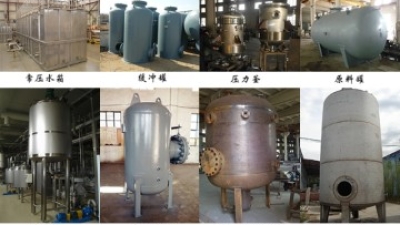
Picking the right Aluminum Pressure Vessel can honestly feel a bit overwhelming, especially with so many options out there these days. These specialized containers are pretty crucial across all kinds of industries—think manufacturing, aerospace, and chemicals—and getting the design and material just right is key to keeping everything safe, efficient, and durable. If you’re involved in any of these fields, it’s really important to understand the main factors that play into choosing the best vessel. It can make a huge difference in how well things perform and how long everything lasts.
In this article, I’ll share ten practical tips to help you make smarter decisions when selecting an aluminum pressure vessel. From digging into the specific needs of your project to making sure you’re compliant with regulations and understanding technical specs—each tip is designed to give you the insights you need to tackle the often complicated selection process. By paying close attention to these critical points, companies can boost their operational efficiency and cut down on risks associated with pressure vessels. When you take the right approach, choosing the perfect aluminum pressure vessel doesn’t just improve productivity—it can save you money in the long run too.
Key Factors Influencing the Durability of Aluminum Pressure Vessels in Industry Applications
When selecting aluminum pressure vessels for industrial applications, durability is a critical factor influenced by various parameters. The North American aluminum market, valued at several billion dollars, continues to grow alongside advancements in alloy formulations and manufacturing processes. Products such as sheets, plates, and extrusions play crucial roles in ensuring that the chosen pressure vessels can withstand extreme conditions. For instance, proper alloy selection not only affects weight and strength but also directly contributes to the vessel's longevity under operational stresses.
Recent analyses reveal that the aluminum pressure vessel sector is closely tied to innovation in materials technology, including the integration of carbon fiber reinforced thermoplastics. These materials are increasingly being considered for enhancing structural integrity and weight reduction in pressure applications. With projected market growth across various segments, understanding the mechanical properties and compatibility of these materials is essential for manufacturers aiming to meet the stringent demands of industrial operations. As the industry moves forward, keeping abreast of these developments will be vital for those looking to select the most effective aluminum pressure vessels for their specific needs.
Understanding Pressure Ratings: How to Select the Right Specifications for Your Needs
When selecting an aluminum pressure vessel, understanding pressure ratings is crucial to ensuring safety and performance. Pressure ratings are categorized into different classes, typically defined by the maximum allowable working pressure (MAWP) that a vessel can safely withstand. According to the Aluminum Association, aluminum vessels can have a MAWP ranging significantly based on their alloy composition and manufacturing processes, often falling between 150 psi to 600 psi. It is essential to refer to these specifications to avoid catastrophic failures during operation.
Another key consideration is the design code that governs the pressure vessel's construction. The American Society of Mechanical Engineers (ASME) provides guidelines that help in upholding safety standards for pressure vessels. Vessels designed according to ASME Section VIII are often subjected to rigorous testing, ensuring they can handle the stipulated pressure ratings. Moreover, a recent industry report highlighted that up to 40% of pressure vessel failures occur due to inadequate pressure rating assessments. Therefore, accurate selection based on well-defined pressure specifications not only guarantees compliance with safety standards but also enhances the longevity and reliability of the vessel in demanding applications.

The Importance of Certification: Ensuring Compliance with Industry Standards for Safety
When selecting an aluminum pressure vessel, ensuring compliance with industry standards through proper certification is crucial for safety and performance. Certification serves as a vital qualifier that verifies a product meets established safety, quality, and performance benchmarks. This is especially imperative in industries where the risk of failure can lead to significant hazards, such as in the automotive and healthcare sectors. In an environment where regulatory expectations are stringent, having the appropriate certifications can mitigate liability and enhance trust among consumers and stakeholders.
Furthermore, the process of certification provides an external validation of quality practices and ensures that companies adhere to the necessary guidelines. As businesses increasingly recognize the importance of certifications, many are now prioritizing these requirements in their operational protocols. By investing in certified pressure vessels, companies not only comply with necessary regulations but also position themselves as leaders in safety and quality assurance, ultimately fostering consumer confidence and industry credibility. Maintaining a focus on compliance through rigorous certification processes underscores the ongoing commitment to safety and excellence in manufacturing practices.
Weight vs. Strength: Finding the Optimal Balance for Efficiency in Design
When selecting an aluminum pressure vessel, striking the right balance between weight and strength is crucial. Aluminum is favored in various applications due to its lightweight properties, which can improve fuel efficiency in transportation and reduce operational costs. According to a report by the Aluminum Association, the specific strength of aluminum alloys allows vessels to withstand high pressure while maintaining a lower overall weight compared to traditional materials like steel. This feature is particularly beneficial in industries such as aerospace and automotive, where every kilogram saved translates to significant efficiency gains.
Tip 1: Evaluate the specific alloy. Different aluminum alloys offer varying levels of strength and corrosion resistance. Alloys such as 7075 are known for their high strength, while 6061 provides excellent weldability and moderate strength. Understanding the application's requirements will guide you to the most suitable choice.
Tip 2: Consider the vessel design. The geometry of the pressure vessel plays a critical role in how it distributes stress. Opting for designs that optimize material use can enhance both strength and weight efficiency. Finite Element Analysis (FEA) can provide insights into how design modifications impact performance, allowing for informed decision-making.
Balancing weight and strength not only optimizes performance but also contributes to sustainability efforts in industries increasingly focused on environmentally friendly production methods.
Cost Analysis: Evaluating Initial Investment vs. Long-term Performance in Pressure Vessels
When evaluating aluminum pressure vessels, a comprehensive cost analysis is crucial for making an informed decision. Initial investment costs can vary significantly based on vessel size, complexity, and specific material grades. According to a report by the Global Pressure Vessel Market, the average upfront cost of aluminum pressure vessels ranges from $5,000 to $20,000, depending largely on customization and manufacturing standards. While this initial price may be steeper compared to alternatives like carbon steel, the long-term benefits can outweigh these costs.
Long-term performance metrics illustrate the value of investing in quality aluminum vessels. Due to their resistance to corrosion and lightweight nature, aluminum vessels often achieve a lifespan exceeding 20 years, reducing the need for frequent replacements. A study by the American Society of Mechanical Engineers found that while aluminum vessels may incur a higher upfront cost, their total lifecycle cost—including maintenance and operational efficiency—can be up to 30% lower than steel vessels over a 15-year period. This data underscores the importance of considering both initial investments and long-term operational savings when selecting a pressure vessel to ensure optimal cost-effectiveness.
Innovative Technologies: Exploring Recent Advances in Aluminum Pressure Vessel Design and Manufacturing
Recent advances in aluminum pressure vessel design and manufacturing have significantly enhanced their performance and reliability. Innovations such as advanced welding techniques and computer-aided design (CAD) have streamlined the production process, ensuring that vessels meet rigorous safety and durability standards. Furthermore, the incorporation of lightweight materials and composite structures not only reduces the overall weight of the vessels but also improves their resistance to corrosion and fatigue. These advancements position aluminum pressure vessels as a preferred choice in various industrial applications.
In addition to material improvements, new technologies like 3D printing and additive manufacturing are revolutionizing how aluminum pressure vessels are produced. These methods allow for the creation of complex geometries that were previously unachievable, leading to more efficient designs that optimize space and reduce material wastage. The ability to prototype quickly and conduct iterative design processes has accelerated innovation in the field. As these technologies continue to evolve, they promise to further enhance the capabilities of aluminum pressure vessels, making them more effective in demanding environments.
10 Essential Tips for Choosing the Right Aluminum Pressure Vessel
| Tip No. | Tip | Description |
| 1 | Consider Material Quality | Ensure that the aluminum used has high corrosion resistance and meets industry standards. |
| 2 | Evaluate Design Standards | Check if the design complies with ASME and other relevant standards. |
| 3 | Assess Manufacturing Techniques | Look for advanced manufacturing techniques like hydroforming for improved strength. |
| 4 | Check Pressure Ratings | Ensure the vessel can handle the required pressure levels safely. |
| 5 | Look for Customization Options | Find manufacturers that offer customized solutions for specific needs. |
| 6 | Inspect Testing Procedures | Verify that rigorous testing is performed post-manufacturing. |
| 7 | Understand Maintenance Requirements | Consider how easy it is to maintain the pressure vessel over its lifecycle. |
| 8 | Evaluate Service and Support | Check what post-sale services and support are provided by the manufacturer. |
| 9 | Seek Client Testimonials | Look for reviews and testimonials from previous customers to gauge reliability. |
| 10 | Compare Prices | Get quotes from multiple sources to ensure competitive pricing without compromising quality. |
Innovative Approaches to Non-Standard Pressure Vessel System Solutions for Diverse Industrial Applications
The development of innovative pressure vessel solutions has become increasingly essential across various industries, including energy, chemicals, and biopharmaceuticals. With over ten years of dedicated effort in this specialized field, we have established a sophisticated high-end equipment system that seamlessly combines research and development, precision manufacturing, and intelligent service. Our commitment to customization enables us to deliver tailored pressure vessel solutions that meet the specific needs of diverse industrial applications.
Our expertise is further enhanced by our national pressure vessel design qualifications in the A2/D1/D2 categories, allowing us to independently create advanced designs. A cornerstone of our approach is our proprietary three-dimensional parametric design platform, which facilitates detailed structural simulations and process optimizations for non-standard equipment, such as adsorption tanks and reactors. This innovative technology has significantly improved our design accuracy to within ±0.5mm, marking a remarkable 40% increase in efficiency compared to traditional methods. By focusing on these innovative approaches, we are setting new standards in the industry, driving progress, and ensuring that our solutions are both effective and reliable for various industrial needs.
FAQS
: Pressure ratings refer to the maximum allowable working pressure (MAWP) that a vessel can safely withstand, ranging typically between 150 psi to 600 psi based on alloy composition and manufacturing processes.
Referring to pressure specifications is essential to avoid catastrophic failures during operation and to ensure the safety and performance of the aluminum pressure vessels.
The American Society of Mechanical Engineers (ASME) provides guidelines, specifically ASME Section VIII, which ensures that vessels can handle stipulated pressure ratings through rigorous testing.
Up to 40% of pressure vessel failures occur due to inadequate pressure rating assessments.
Certification verifies that a product meets safety, quality, and performance benchmarks, which is crucial in industries like automotive and healthcare where failure can pose significant hazards.
Obtaining certifications mitigates liability, enhances consumer confidence, and positions companies as leaders in safety and quality assurance.
Recent advances include advanced welding techniques, computer-aided design (CAD), and the use of lightweight materials, improving performance, reliability, and resistance to corrosion.
3D printing and additive manufacturing allow for the creation of complex geometries, leading to more efficient designs and reducing material wastage during production.
Modern aluminum pressure vessels are lighter, more resistant to corrosion and fatigue, and have improved designs due to innovative manufacturing technologies.
Innovations streamline production, facilitate quick prototyping, and enhance design capabilities, promising greater effectiveness in demanding industrial environments.
Conclusion
Choosing the right Aluminum Pressure Vessel is critical for optimizing industrial applications, and several key factors must be considered. The durability of these vessels is influenced by their design, pressure ratings, and compliance with industry standards, ensuring safety and reliability. Companies must evaluate the weight versus strength balance to enhance efficiency while also considering cost analysis that weighs initial investment against long-term performance.
Innovative technologies are transforming the design and manufacturing of Aluminum Pressure Vessels, promoting advancements that cater to the evolving needs of the energy conservation and environmental protection sectors. At Hebei Hongke Qingneng Environmental Protection Equipment Co., Ltd., we are dedicated to contributing to these advancements, focusing on research and development within the industrial base of Sanhe Economic Development Zone to provide our clients with superior and compliant pressure vessels tailored to their operational requirements.