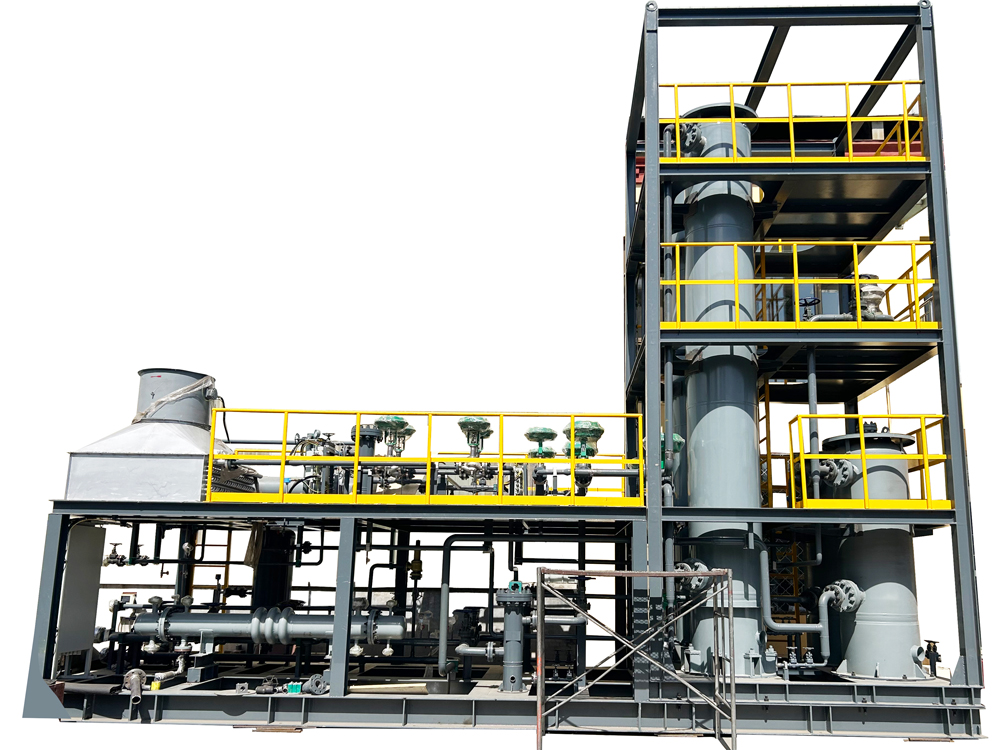
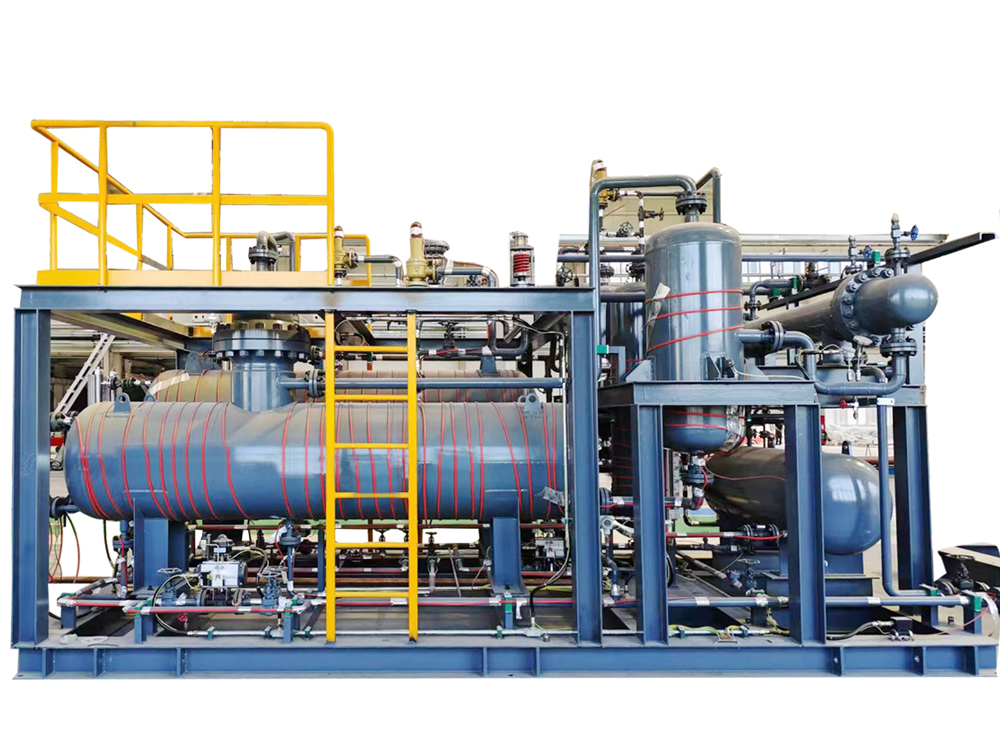
China Suppliers Factory for Purification Equipment: Deacidification, Dehydration & Heavy Hydrocarbon Removal Solutions
Effective pre-treatment is essential for managing hazards associated with feedstock impurities. Our factory specializes in providing top-quality solutions for feedstock pre-treatment to ensure optimal safety and quality control. As reliable suppliers in China, we focus on reducing impurities that could compromise your production process. Trust our expertise in pre-treatment to enhance the efficiency and safety of your operations.
Pre-treatment: hazards and control of feedstock impurities
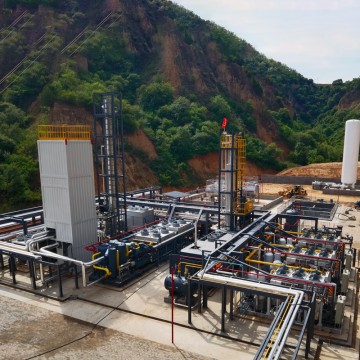
In the gas treatment process, the impurities contained in the raw gas, such as liquid free water, solid particles, H₂O, acid gas (CO₂, H₂S), etc., not only accelerate the corrosion of the equipment and clogging of the pipeline, but also may affect the stability of the subsequent process and the quality of the product, so it is necessary to strictly control the impurity indicators. Pre-treatment adopts a step-by-step purification strategy, firstly, the use of alcohol and amine method to efficiently remove the acidic gas, and then with the help of molecular sieve adsorption technology, to further remove water, heavy hydrocarbons, mercury and other impurities, in order to lay the foundation for the subsequent treatment.
STEP 2
Acid gas removal: multiple technologies and customised solutions
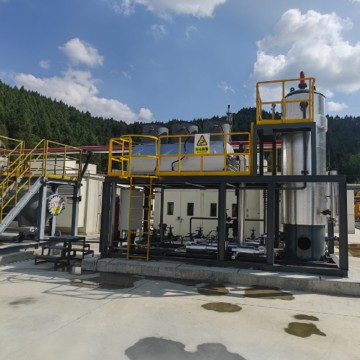
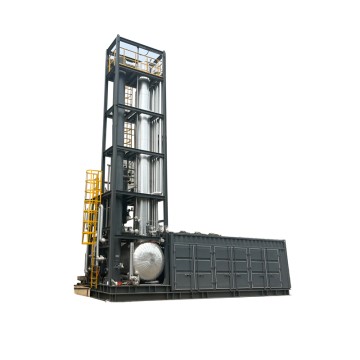
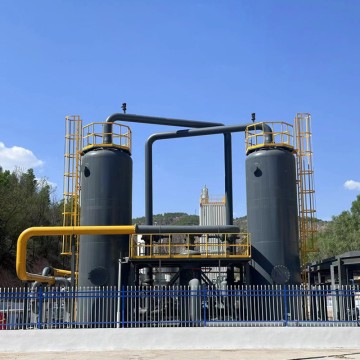
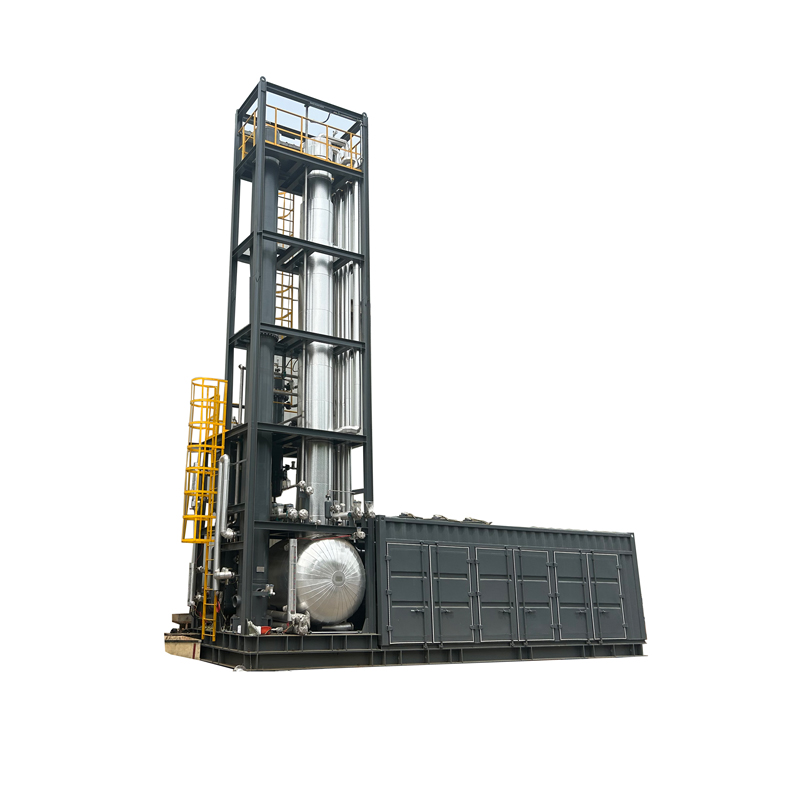
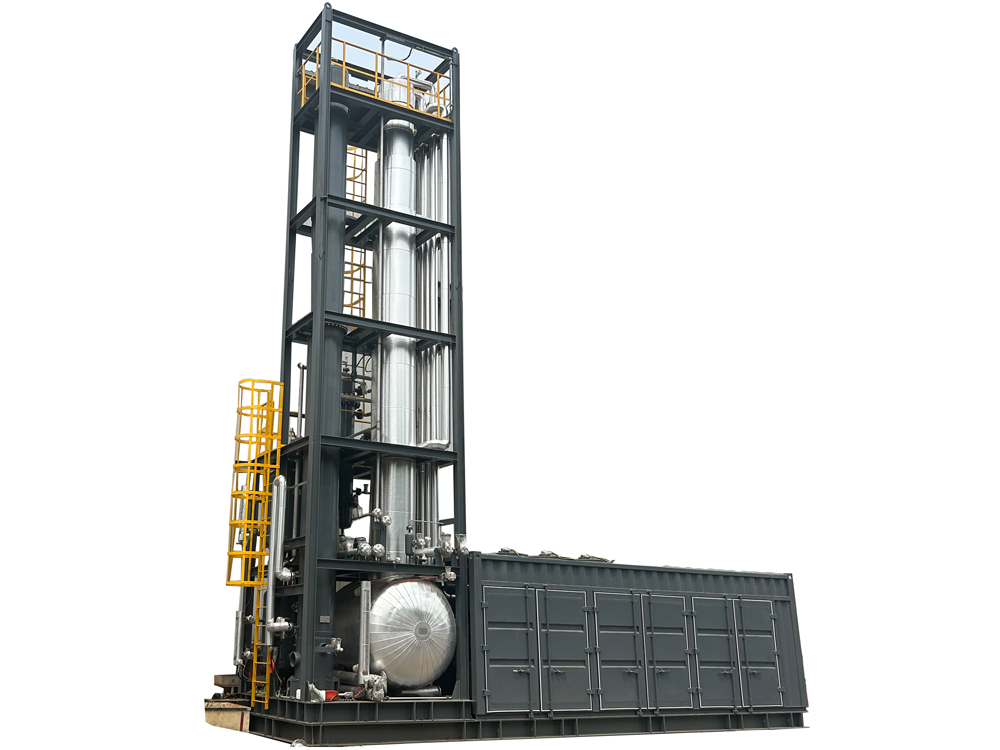
There are many different technologies for acid gas removal, including molecular sieve adsorption method, alcohol-amine method, modified hot potassium method, sulfone-amine method and so on. The selection of solvents and process design for different technologies requires comprehensive consideration of the composition of the raw gas, pressure conditions, product quality standards, and overall costs and operating expenses. With rich experience in the industry, HNK customises the deacidification plant based on ethanolamine method to ensure efficient acid gas removal according to the characteristics of the gas components and the working conditions at the site.
STEP 3
Dewatering: Efficient solutions to fit the scenario
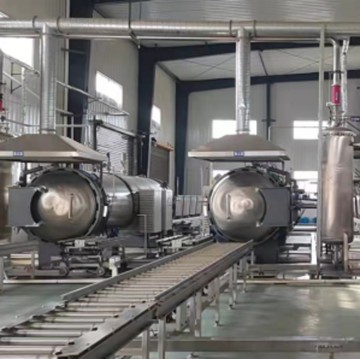
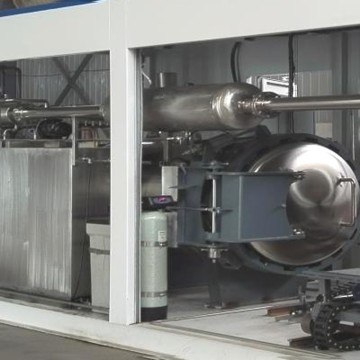
Natural gas dehydration mainly adopts absorption and adsorption methods. For small-scale projects, the molecular sieve adsorption method has the advantage of efficient dewatering even under low partial pressure of water vapour due to its strong adsorption performance, while further removing residual acid gas. In addition, the device is easy to operate, compact and occupies a small space, which is highly suitable for small-scale projects. It is worth mentioning that the regas of the molecular sieve system comes from the BOG after recovering the cooling capacity of the re-liquefaction unit, so as to achieve the recycling of energy.
STEP 4
Removal of trace mercury and aromatic hydrocarbons: a guarantee of precision purification
In order to ensure that the gas quality meets the stringent standards, the purification equipment adopts targeted technology to deal with trace pollutants. Specialised sulphur-impregnated coal-based activated carbon is used to effectively adsorb and remove possible trace amounts of mercury, while special adsorbents are used for in-depth purification of aromatic hydrocarbons. Through these precise treatment measures, trace impurities in the gas are efficiently removed, and the gas purification effect is guaranteed in all aspects.
Frequently Asked Questions (FAQ)
Q1: Why is pre-treatment necessary in gas purification?
A1: Pre-treatment removes harmful impurities like liquid free water, solid particles, H₂O, and acid gases. Left untreated, these components can accelerate equipment corrosion, clog pipelines, and compromise the stability and quality of the downstream process.
Q2: What technologies are available for acid gas removal?
A2: Various methods exist, including molecular sieve adsorption, alcohol-amine methods, modified hot potassium methods, and sulfone-amine methods. Solvents and process designs are customized based on gas composition, pressure, and cost considerations.
Q3: Why is molecular sieve adsorption ideal for small-scale dewatering?
A3: It provides highly efficient water removal even at low water vapor partial pressure, removes residual acid gas, requires a compact space, is easy to operate, and allows energy recovery by using BOG from the re-liquefaction unit for regeneration.
Q4: How are trace mercury and aromatic hydrocarbons removed?
A4: Trace mercury is captured using specialized sulfur-impregnated coal-based activated carbon, while aromatic hydrocarbons are thoroughly purified using dedicated adsorbents to meet strict gas purity standards.
Q5: How does HNK customize its deacidification plants?
A5: HNK designs customized systems based on the ethanolamine method, tailoring the process to the specific gas components and site operating conditions to ensure optimal acid gas removal efficiency.
Inquire Now!
If you have any needs, please feel free to contact me and I will be happy to serve you.